

It Is Not So Easy For easyGroup | Trade Marks, Litigation and Market Perception
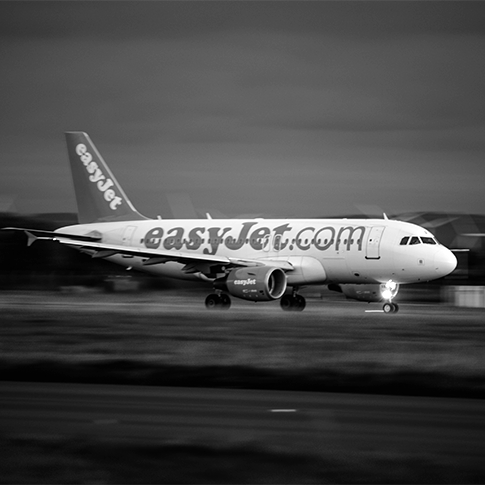

easyGroup, the behemoth company that owns brands like easyJet, easyTaxi, easyHotel and easyMoney, lost a copyright infringement claim against a fundraising platform called ‘Easyfundraising.’
Stuart Southall of KANGS comments on the case EasyGroup -v-Easyfundraising and others [2024] EWHC 2323 (Ch), in which Mr Justice Fancore determined that Easyfundraising was not infringing the intellectual property rights as pleaded by easyGroup.
easyGroup’s Brand Monopoly
Sir Stelios Haji-Ioannou is a businessman who has built a substantial commercial empire under the ‘easy’ brand, recognised for its distinctive orange branding. Its most prominent brand is easyJet, but the ‘easy’ venture spans everything from taxis and hotels to cruises and cryptocurrency. The easyGroup owns more than 1,000 trade marks and further enhances its brand and reputation through licensing deals.
The easy brand is highly recognisable. It is consistently presented with ‘easy’ in Cooper Black font, in lower-case letters, followed by a word with a capitalised first letter such as ‘Jet’ on a bright orange background.
Whilst having substantial trade mark protection is beneficial and easyGroup recognises this. Rightly or wrongly, easyGroup gives the impression that it is very London-centric, as many of its brands such as easyTaxi and easyHotels predominately feature in London and its surrounding areas, rather than other major British cities.
Notwithstanding this, easyGroup seems to believe that it has an absolute monopoly on the word “easy” and its many variations, including phonetic spellings. It will almost certainly challenge any trader who uses ‘easy’ in their name, brand or product, and has acquired many ‘easy’ trade marks through litigation.
Unfortunately for easyGroup, much like what the McDonald’s corporation experienced with ‘Big Mac’ in the Republic of Ireland, the Court's do not always agree that the intellectual property protection claimed, should always be so monopolistic.
The Case in Focus
As part of its pleaded case, easyGroup asserted that Easyfundraising had infringed nine of its trade marks and thereafter the associated goodwill, either directly belonging to easyGroup or indirectly to its licensees.
easyGroup stated that the following marks had been infringed:
- easyJet
- easyHotel
- easy.com
- easyMoney
- easyGroup
- easylife
- easy networks
Easyfundraising
Since its inception, Easyfundraising used three different trade marks during the course of its business. Its current trade mark has been in use since June 2022.
Whilst it is not a charity, it has considerable charitable links, donating around 50% of its income to various charities chosen by its users. Since it began trading, it has donated around £50 million to various charitable causes.
The Court Case
Helpfully for the Court, a number of the matters argued by easyGroup were not in dispute, which reflected the position adopted by Easyfundraising. Its pleaded case was that the Court should not look at the matters that were advanced, the undisputed points, or the evidence provided by easyGroup’s witnesses, but on the striking absence of evidence.
For a long time it has been and is likely to continue to be, the position that a key element of showing trade mark infringement, particularly in circumstances where a correlating passing off argument also applies, is the ‘reasonable man test’ – would people be confused as to the similarities of the disputing Marks. Easyfundraising advanced the argument that there was an absence of:
- contemporaneous evidence to show that anyone had been confused,
- contemporaneous evidence to show that the ‘reasonable man’ had associated the alleged infringing Mark to those of the Claimant and/or its licensees,
- contemporaneous evidence to show the perceived damage to easyGroup (or its licencees) reputation or distinctiveness of its Marks,
- suitable explanation as to why easyGroup had failed to undertake any protective action in respect of its complained of Marks prior to 2022.
The Judge also found that Easyfundraising’s website would not have been misunderstood by anyone utilising a moderate degree of care. Importantly, the Judge found that there had not been a single documented report of any complaints relating to the quality of goods/services purchased, because it was not Easyfundraising selling those goods/services but well-known retailers.
The Judge also importantly determined that the Marks used by Easyfundraising were viewed as “badges of fundraising through retail” rather than as a badge of origin.
The Court also had to consider arguments that were advanced by Easyfundraising in respect of the easyGroup Marks, specifically:
- whether there was sufficient reputation for the complained of Marks, with the reasonable man, during the relevant periods for the services covered by the complained of Marks
The Court was given specifics regarding the use of the Marks during set periods, but not necessarily, sufficient evidence to show that each Mark had acquired a distinct reputation in its field beyond a set point. Easyfundraising argued that there was not a substantive reputation associated with the Mark. However, the Court found that on the balance of probabilities, in one way or another, easyMoney had been providing services since circa 2009.
Easyfundraising therefore sought to revoke a number of the trade mark registrations which were sought on whole or partial bases. easyGroup sought to argue that the reason it had evidenced matters as it did, was due to the case that Easyfundraising had pleaded. The Court did not accept that argument on the grounds that easyGroup had previously been before the Court, and the same arguments were advanced, with the same Counsel and witnesses. Additionally, easyGroup had failed to elicit a different answer then and so, the Court found that easyGroup was not prejudiced by meeting the partial revocation case and that Easyfundingraising was able to pursue the same.
When surmising the Court made the following comments:
- “easylife” alone do not make the word distinctive. The loss or change of other distinctive elements alter the distinctive characteristics of the Mark and the text variant is not a variant form within s46(2). The Court therefore held that the changes were not ‘minor changes’ and that the Mark should be revoked for non-use,
- Due to the Court reaching its decision on the revocation, the s10(2) 1994 Act fell away,
- the absence of actual confusion is not necessarily fatal to a claim under s10(2), but the longer the use of the complained of Mark, the more significant that absence is going to be,
- although there was the possibility that there was some similarity between the Marks, it was not a strong similarity and the word “easy” was not perceived as a dominant characteristic of the Marks,
- easyGroup did not satisfactorily make out the s10(2) grounds as of November 2005 and May 2007,
- with regards to @easyuk, the Court found that this was distinguished from Easfundraising’s Mark because the only ‘distinctive’ element was ‘easy,’ and although there was a closer similarity between this and easyGroup’s marks, the goods/services were different. The Court held that there was no identity/similarity between the goods/services, but even if there had been some similarity, it considered that it was unlikely that there would have been any confusion by the ‘reasonable man.’
- the Court also considered that the more ‘updated Mark’ which contained a strap line “feel good shopping,” further distinguished the difference between the Marks, particularly given that the designers had been advised to steer clear of anything resembling easyGroup’s Marks.
- that easyGroup had not, on a number of occasions, satisfactorily evidenced that it had the requisite substantive reputation during the dates. Its argument that easyJet was so famous that any company using ‘easy’ in its name would automatically draw an association to easyJet – Mr Justice Fancourt did not think so.
Stuart’s Closing Comments
Whilst I am aware that easyGroup appealed the decision referred to herein, my opinion is that the Court was correct in its determination. The monopolisation of an everyday word does not mean that it is infringing a valuable intellectual property right, but if you do want to make such an allegation, then it is important to establish that:
- your Mark covers the classes it is supposed to,
- you are using the Mark, for goods/services, that you are asserting a reputation for,
- you can establish that there have been instances of confusion;
- those instances have established, or can establish, damage (both monetary and reputationally), and
- you can support the allegations that are relied upon with evidence.
Whilst easyGroup has grown its portfolio significantly through early filings and clever marketing, it has also acquired many through litigation. However, this does not mean it has an overriding entitlement to the word ‘easy.’
How We Can Assist
If you are concerned that a competitor may be breaching any Trade Mark you own, or that you may have breached one that belongs to someone else, it is essential that you seek immediate expert advice.
The team at KANGS provides a wealth of experience gained from assisting clients involved in Trade Mark infringement and/or passing off actions and will be pleased to hear from you
If we can be of assistance, please do not hesitate to contact us using the details below:
Tel: 0333 370 4333
Email: info@kangssolicitors.co.uk
We provide initial no obligation discussion at our three offices in London, Birmingham, and Manchester. Alternatively, discussions can be held through video conferencing or telephone.





Top ranked by leading legal directories Chambers UK and the Legal 500.