

How the Supreme Court Views Trade Mark Similarity | Iconix v Dream Pairs Explained

At KANGS, we support individuals and businesses both in protecting their trade marks and in responding to allegations that their branding is confusingly similar to another’s. In this article we examine a high-profile intellectual property dispute involving trade marks and explain the key implications and lessons for brand owners.
In June 2025, the Supreme Court handed down its Judgment in the case of Iconix Luxembourg Holdings SARL v Dream Pairs Europe Inc and Top Glory Trading Group Inc (EWCA Civ 29), representing the conclusion of proceedings which had commenced in July 2021.
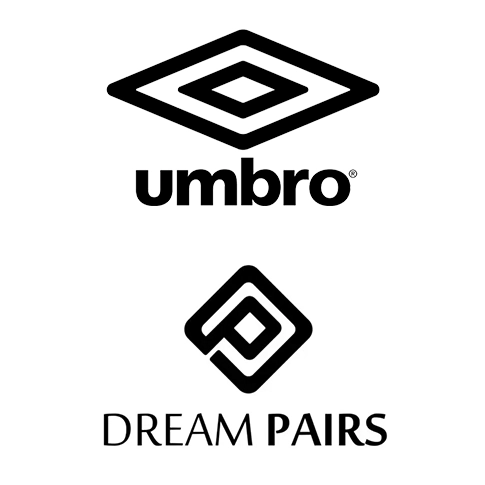
Iconix currently owns the Umbro brand. Umbro products are commonly identified by a distinctive ‘double diamond’ mark, and is strongly associated with sportswear, particularly football apparel, at both club and international levels.
Dream Pairs is a fashion sportswear brand that manufactures sports clothing and shoes, including football boots. It has used a stylised logo of its initials, the ‘DP Sign’ on its products including footwear since December 2018.
Iconix (the Claimant) commenced proceedings against Dream Pairs (the Defendant) maintaining that it had adopted a logo (‘the DP Sign’) featured on footwear, which was similar to its own registered ‘UMBRO’ trade mark, resulting in the likelihood of confusion among consumers and took unfair advantage of its own registered trade mark.
Stuart Southall of KANGS outlines the Supreme Court’s decision in Iconix v Dream Pairs, the relevant statutory law as applied in this dispute, including the assessment of similarity, post-sale confusion, and the implications for brand protection.
Contents
The Relevant Law
The Trade Marks Act 1994 provides:
S.10 Infringement of registered trade mark.
(1). A person infringes a registered trade mark if he uses in the course of trade a sign which is identical with the trade mark in relation to goods or services which are identical with those for which it is registered.
(2). A person infringes a registered trade mark if he uses in the course of trade a sign where because;
- the sign is identical with the trade mark and is used in relation to goods or services similar to those for which the trade mark is registered, or
- the sign is similar to the trade mark and is used in relation to goods or services identical with or similar to those for which the trade mark is registered,
there exists a likelihood of confusion on the part of the public, which includes the likelihood of association with the trade mark.
(3), A person infringes a registered trade mark if he uses in the course of trade, in relation to goods or services, a sign which;
- is identical with or similar to the trade mark,
- where the trade mark has a reputation in the United Kingdom and the use of the sign, being without due cause, takes unfair advantage of, or is detrimental to, the distinctive character or the repute of the trade mark.
This applies irrespective of whether the goods and services in relation to which the sign is used are identical with, similar to or not similar to those for which the trade mark is registered.
The Background to the Trade Mark Dispute
In the proceedings, commenced in 2021, Iconix claimed that Dream Pairs had infringed its UK registered trade marks under:
- Section 10(2) of the Act by creating the likelihood of confusion between the UMBRO and DP Sign,
- Section 10(3) of the Act, for taking unfair advantage and acting in a manner detrimental to the distinctive character or repute of its trade mark.
This was a complicated dispute, as evidenced by the fact that it proceeded all the way to the Supreme Court, but fundamentally, it revolved around the likelihood of consumer confusion between products, whether at the time of sale or at a later date when the products are in use.
The dispute was originally heard before the High Court in March 2023 when it rejected the claim of Iconix. An appeal to the Court of Appeal saw that decision reversed in favour of Iconix.
The decision of the Supreme Court found in favour of Dream Pairs on one of three grounds, meaning that the commercial outcome reverts to that prevailing at the conclusion of the first trial.
The High Court Proceedings
The claims brought by Iconix were dismissed. The Judge emphasised the importance of contextual use, consumer perception, and evidentiary support in trade mark disputes.
When delivering Judgment he:
- found only a very low degree of similarity between the UMBRO marks and the DP Sign,
- rejected the claim that any post-sale confusion existed,
- considered there was no evidence of detriment to the marks’ distinctiveness or reputation and no unfair advantage was taken by Dream Pairs.
The Court of Appeal Judgment
The Court of Appeal allowed the Appeal by Iconix and, in so doing, it concluded that the High Court had:
- underestimated the similarity between the Umbro Mark and the DP Sign,
- erred in its assessment of the likelihood of post-sale confusion and failed to properly consider how the DP Sign would be perceived by consumers encountering it for the first time post-sale,
- incorrectly interpreted the structure of the DP Sign.
The Court of Appeal concluded that there was a likelihood of confusion among a significant portion of the public and that Dream Pairs was guilty of trade mark infringement.
The Supreme Court Judgment
The Court of Appeal Judgment was appealed by Dream Pairs to the Supreme Court which addressed the two principal legal grounds raised.
Similarity Issue i.e. whether post-sale viewing angles, such as looking down at worn footwear, can be considered when assessing similarity between marks.
The Court:
- held that it is permissible to consider realistic and representative post-sale viewing angles when assessing similarity between a sign and a trade mark.
- rejected Dream Pairs' argument that only intrinsic features or side-by-side comparisons should be considered at the similarity stage.
Confusion Issue i.e. whether post-sale confusion can constitute actionable infringement under the Act.
The Court:
- affirmed that post-sale confusion can constitute a likelihood of confusion even if there is no confusion at the point of sale,
- found that the Court of Appeal erred in substituting its own evaluation for that of the High Court Judge whose findings were neither irrational nor legally flawed and should not have been overturned.
Accordingly, the Supreme Court allowed the Appeal and restored the High Court's decision, that Dream Pairs had not infringed the UMBRO trade marks, despite rejecting several of its arguments.
The Effects of the Decision
The Supreme Court’s decision amounts to recognition that brands are important to consumers continuously as they are used, and not simply at the point of sale. This makes the assessment of similarity between trade marks very important, as their function extends beyond the moment of purchase.
How Can We Help You?
At KANGS, our legal services cover all aspects of trade mark law, with particular experience in resolving intellectual property disputes. Renowned for delivering exceptional service to both individual and corporate clients, the team at KANGS can provide assistance, regardless of the nature and complexity of the dispute.
If your trade mark has been infringed or if you are facing allegations of infringement, our trade mark lawyers provide strategic representation. Our lawyers are committed to ensuring your rights, intellectual property and brand is protected. Call us using the contact details below, our team would be delighted to assist you.
Tel: 0333 370 4333
Email: info@kangssolicitors.co.uk
We provide initial no obligation discussion at our three offices in London, Birmingham, and Manchester. Alternatively, discussions can be held through video conferencing or telephone.