

Taxpayer Victory in Tax Tribunal | VAT Zero-Rating
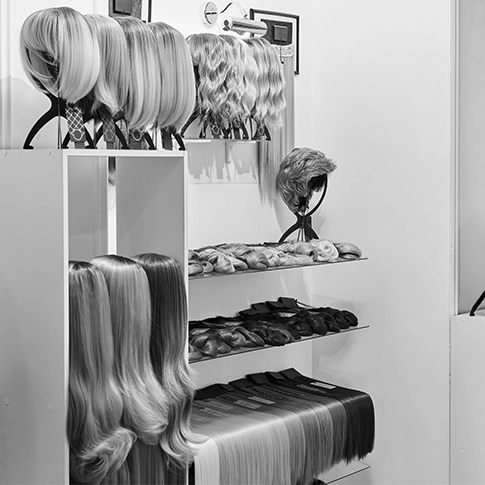

In a positive outcome for taxpayers, the Upper Tribunal has overturned an earlier First-tier Tribunal (FTT) decision, ruling that supplies of a hair loss replacement system qualify for zero-rating under VAT law as services adapting goods for disabled persons. This case clarifies the application of Schedule 8, Group 12 of the Value Added Tax Act 1994 (VATA 1994), potentially saving businesses and customers substantial VAT costs on similar treatments.
We represent clients across a broad range of businesses in VAT and tax disputes with HMRC, from construction, labour provision and employment agencies to professional services, the alcohol and drinks sector, the motor trade, and many other goods and services industries.
Hamraj Kang of KANGS discusses the recent case of Mark Glenn Ltd v HMRC [2026] UKUT 34 (TCC), which ruled that a hair loss treatment system should be zero-rated for VAT despite the objections from HMRC.
Background to the Dispute
Mark Glenn Limited, a company specialising in hair loss solutions for women, faced a VAT dispute with HMRC spanning a period of around six years, involving nearly £300,000 in disputed VAT. The core issue was whether the company's ‘hair loss replacement system’ a specialised treatment involving the supply and adaptation of hair replacement products, qualified for zero-rating under Schedule 8, Group 12 of VATA 1994 or whether such treatment should be standard rated for VAT.
Under section 30 of VATA 1994, certain supplies of goods or services are zero-rated if they match descriptions in Schedule 8. Group 12 specifically covers ‘drugs, medicines, aids for the disabled, etc.’ Item 3 within this group zero-rates the supply to a disabled person of services of adapting goods to suit his condition. Mark Glenn Limited argued that their system fell under this provision, as it adapted hair replacement goods to address severe hair loss in women, which they contended constituted a disability impairing daily activities.
HMRC disagreed, assessing the supplies as standard-rated at 20% VAT. Mark Glenn Limited appealed to the FTT, which dismissed the claim, finding the system did not qualify for zero-rated VAT. Undeterred, Mark Glenn Limited appealed to the Upper Tribunal on various grounds.
The First-tier Tribunal's Decision
The FTT concluded that the hair replacement system did not meet the criteria for zero-rating under Item 3. It reasoned that while the supplies involved adaptation of goods, severe hair loss did not inherently qualify as a ‘disabled person's condition’ warranting the relief.
Mark Glenn Limited’s Upper Tribunal appeal raised a number of grounds, including:
- Failure to give reasons: The FTT allegedly failed to properly explain why baldness in women was not a physical or mental impairment which had a long-term and substantial adverse effect on their ability to carry out everyday activities. A key test for disability under VAT Group 12.
- Fiscal Neutrality principle: This EU-derived principle (now retained in UK law post-Brexit) requires similar supplies to be taxed alike. The argument was that wigs are zero-rated for VAT and therefore the hair loss system deployed by the Appellant should also be zero-rated for VAT.
- Adapting goods to suit his condition: The FTT erred in finding that the adapting of individual fibres into the mesh to specifically address the individual hair loss suffered, which was unique to each client's hair loss, was not a supply to disabled person of services of adapting goods to suit the disabled person's condition.
- Edwards v Bairstow ground: The FTT's conclusion that baldness in women was not a disability was one that no reasonable tribunal could have reached on the evidence, as per the landmark case Edwards v Bairstow.
The Upper Tribunal, comprising Judge Raghavan and Judge Poole, heard the appeal at the Rolls Building, London, delivering its decision on 23 January 2026.
Upper Tribunal's Analysis
The Upper Tribunal meticulously considered the FTT's decision and delivered the following findings:
- Failure to give reasons: The Upper Tribunal ruled that this Ground was made out and said: The FTT's reasoning for its conclusion that hair loss of the type treated with this particular system in and of itself was not a disability did not constitute adequate reasoning that enable the parties or this Tribunal to understand why the Appellant's evidence did not make good the proposition that the recipients of this type of system, who in each case were women who suffered from baldness (in the form of severe and patchy hair loss), were disabled as a result of such hair loss for the purposes of the Item 3 Group 8 Schedule 12 provision.
In reaching this conclusion the Upper Tribunal emphasised that for the reasoning to be adequate it did not need to be lengthy. It simply needed to explain, perhaps in no more than a paragraph or so, why the Appellant's case (that hair loss of the type involved was a disability in and of itself) was being rejected. - Fiscal Neutrality Principle: The Upper Tribunal dismissed this Ground. It found that the FTT correctly identified that while both products address hair loss, the evidence demonstrated that the system used by the Appellant was chosen precisely because it is different from a wig.
- Adapting goods to suit his condition: the Upper Tribunal found that the FTT had erred in this regard in relation to its application of Item 3.
- Edwards v Bairstow ground: The Upper Tribunal rejected this Ground concluding that even though the FTT’s reasoning was inadequate, it could not say that its conclusion that severe baldness in women was not itself a disability was a conclusion that was one that no reasonable tribunal could have reached and therefore perverse.
As a result of Grounds 1 and 3, the Upper Tribunal was able to remake the decision rather than remit the case to the FTT and concluded as follows:
- The Upper Tribunal had no difficulty in concluding that the severe hair loss suffered by the customers of the Appellant constituted a ‘disability’.
- It was made clear that the decision was confined to the facts of this particular case and to women who experienced baldness in the form of severe and patchy hair loss.
- The Upper Tribunal concluded that the service being provided by the Appellant was ‘that of adapting goods to suit the condition of a disabled person.’
- Therefore, each of the supplies fell within the terms of Item 3 of Group 12 and were zero-rated for VAT.
How Can We Assist?
The team at KANGS regularly provide assistant to individuals and businesses facing VAT disputes or tax investigations by HMRC.
If you have received a VAT Assessment, or you need assistance to lodge an appeal with the Tax Tribunal, we are here to help.
Tax regulations are constantly evolving, and our specialist solicitors stay alert to new developments and challenges as they arise. If you have been contacted by HMRC or have any concerns about your tax affairs, please get in touch to speak with our tax solicitors for confidential and discreet advice.
Please contact our team using the details below as we will be pleased to assist.
Tel: 0333 370 4333
Email: info@kangssolicitors.co.uk
We provide initial no obligation discussion at our three offices in London, Birmingham, and Manchester. Alternatively, discussions can be held through video conferencing or telephone.





Top ranked by leading legal directories Chambers UK and the Legal 500.