


Environment Agency Enforcement Notices and Environmental Permits Explained
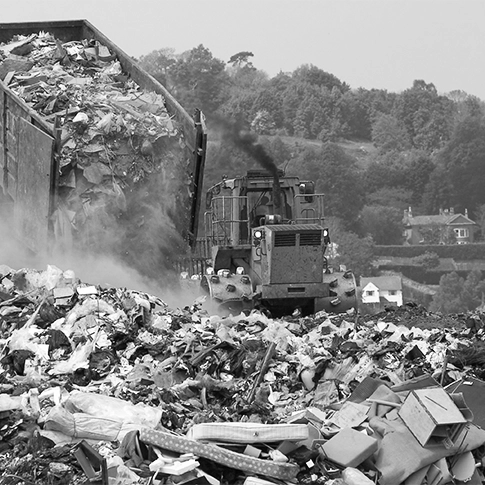

An Environmental Permit or Licence is required if a business undertakes an activity that could pollute the air, water or land, or increase flood risk or cause other environmental impacts. Operations such as a large chicken farm, a scrap or breakers yard or a petrol station present a risk of pollution or environmental harm, which is why they are subject to environmental controls.
In a previous article entitled ‘Breach of Environmental Permit Penalties & Sanctions’ we commented on the Environment Agency focus on ensuring compliance with the requirements of the Environmental Permitting (England and Wales) Regulations 2016 (‘the Regulations’) and the potentially devastating consequences arising from breaching the Regulations.
In this article Sukhdip Randhawa of KANGS outlines the enforcement powers available to the Environment Agency when faced with apparent breaches of the Regulations.
Environmental Permits
An Environmental Permit, which may be granted to an operator upon request, is subject to the Regulations, which are designed to ensure that ‘regulated facilities’ are carried out responsibly and with appropriate safeguards for the environment. Where those safeguards are not met, or are at risk, the Environment Agency has the power to issue a range of Formal Notices to ensure that the matters of concern are rectified.
Regulation 12(1) provides that a person must not except under and to the extent authorised by an Environmental Permit operate a regulated facility which description includes a:
- waste operation,
- mining waste operation,
- small waste incineration plant,
- flood risk activity,
- medium combustion plant.
Environment Agency Enforcement Notices
The Environment Agency typically commences enforcement action by issuing one of a number of procedural Notices according to the nature of the environmental breach.
Regulation 36(1) states that if the Regulator considers that an operator has contravened, is contravening, or is likely to contravene an Environmental Permit condition, the Regulator may serve a Notice on the operator.
Regulation 38(3) provides that it is an offence for a person to fail to comply with the requirements of a number of notices which include:
- an Enforcement Notice,
- a Suspension Notice,
- a Revocation Notice.
Enforcement Notice
Regulation 36(2) states that the Enforcement Notice must:
- state the Regulator's view under Section 36 (1), (above),
- specify the matters constituting the contravention or making a contravention likely,
- specify the steps that must be taken to remedy the contravention or to ensure that the likely contravention does not occur, and
- specify the period within which those steps must be taken.
- make the operation of a regulated facility comply with the Environmental Permit conditions, and
- remedy the environmental effects caused by the contravention.
Suspension Notice
The Regulator may suspend an Environmental Permit where it is considered that the operation of a regulated facility involves a risk of serious:
- flooding,
- detrimental impact on drainage,
- harm to the environment.
Regulation 37(7) states that a Suspension Notice must specify:
- the identified risks,
- the steps that must be taken to remove that risk,
- where the risk involves potential pollution or flood risk, the matters constituting the contravention, and the steps that must be taken to remedy that contravention,
- the period within which the required steps must be taken,
- that the Environmental Permit ceases to have effect until the Notice is withdrawn.
Revocation Notice
The Regulator may revoke an Environmental Permit either completely or partially. If only part of the Permit is revoked, the Regulator may vary its conditions as considered necessary.
Regulation 22(3) states that a Revocation Notice must specify:
- the reasons for the revocation,
- in the case of a partial revocation, the extent to which it is being revoked, and any variation to the conditions under which it was issued,
- the date on which the revocation will take place, which must not be less than twenty working days after the date on which the Notice is served.
Publication of Notices
Regulation 46(1) provides that the Regulator must maintain a Public Register to contain a copy of specified activity relating to an Environmental Permit including:
- its grant, variation and any surrender,
- the issue of every Notice including those relating to Enforcement, Suspension and Revocation.
The Regulator must make the Public Register available for inspection at all reasonable times, free of charge, and to provide copies of entries for a reasonable fee.
The Right to Appeal Against A Notice
Regulation 31 provides a wide range of circumstances in which an aggrieved person may appeal to the appropriate authority including where:
- an application for an Environmental Permit has been refused,
- disputed conditions are imposed,
- an Enforcement, Suspension or Revocation Notice is served.
An Example of the Regulations Being Enforced
In February 2024, the Environment Agency issued an Enforcement Notice against the Ashcourt Group in County Durham following numerous complaints from local residents of persistent, 'rotten egg' odours escaping from its Aycliffe Landfill Site.
The Enforcement Notice stated that:
- there was inadequate capping material to control the prevention of migration of landfill gas,
- the vertical gas wells present were inadequate for collecting landfill gas,
- the gas collection system was generally inadequate.
The Enforcement Notice required various steps to be implemented including the:
- installation of engineered temporary capping, the design and construction of which were specified,
- installation of pin wells, the design and number of which were specified,
- submission of a Validation Report to confirm the satisfactory completion of the required improvements.
Aycliffe Landfill failed to satisfactorily meet the deadline which had been imposed for all stages given that some pipework still remained to be connected to the gas extraction system.
It was accepted that heavy rainfall had rendered it impossible to access the relevant part of the site, the Environment Manager allowed the site to continue operating but ordered the site to remain under close monitoring, with regular air pollution readings being taken until the outstanding works had been completed.
How Can We Help?
The focus by the authorities on protecting all aspects of the environment is resulting in an increasing number of Environment Agency investigations, imposition of financial penalties and, in more serious cases, prosecutions for breach of the law, including the Environmental Permitting Regulations.
If you are concerned about any of the matters referred to in this article, it is essential that you obtain immediate legal advice and guidance.
The team at KANGS possesses extensive knowledge and expertise across all aspects of environmental law, gained over many years of representing clients facing alleged breaches of environmental law. This includes clients who have received Enforcement Notices, Suspension Notices and Revocation Notices from regulatory authorities.
If we can be of assistance, please do not hesitate to contact us using the details below:
Tel: 0333 370 4333
Email: info@kangssolicitors.co.uk
We provide initial no obligation discussion at our three offices in London, Birmingham, and Manchester. Alternatively, discussions can be held through video conferencing or telephone.





Top ranked by leading legal directories Chambers UK and the Legal 500.