

What is Livestock Worrying & What Are The Penalties?
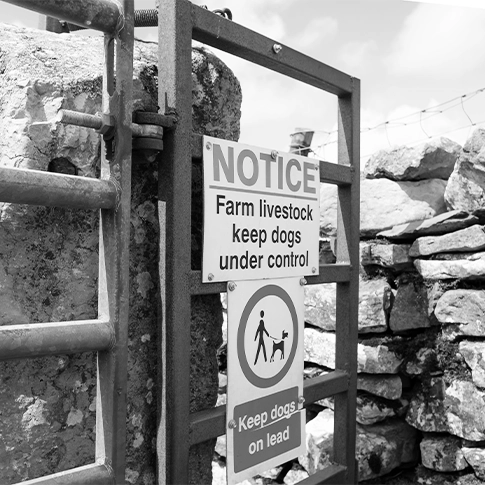

The increasing incidences of dogs attacking and worrying livestock, resulting in death, injury and lost pregnancies among affected animals, as well as the distress and financial loss for farmers, has resulted in farmers and police forces calling for modernisation of the existing law.
Accordingly, The Dogs (Protection of Livestock) (Amendment) Bill (‘the Current Bill’) has been introduced to strengthen the law concerning the offence of livestock worrying. It expands the definition of livestock, broadens the locations where incidents may take place and increases police powers for investigation and dog detention.
Sukhdip Randhawa of KANGS sets out the current law and indicates the new proposals.
Livestock Worrying Explained | The Current Law
The Dogs (Protection of Livestock) Act 1953 (‘the Act’) provides as follows.
Section 1. Penalty where dog worries livestock on agricultural land.
Subject to the provisions mentioned below, if a dog worries livestock on any agricultural land, the owner of the dog, or other person in charge of it, shall be guilty of an offence.
Worrying livestock means:
- attacking livestock, or
- chasing livestock in such a way as may reasonably be expected to cause injury or suffering to the livestock or, in the case of females, abortion or loss of or diminution in their produce; or
- being at large (not on a lead or otherwise under close control) in a field or enclosure in which there are sheep).
Section 1 does not apply in relation to:
- a dog owned by, or in the charge of, the occupier of the field or enclosure or the owner of the sheep or a person authorised by either of those persons or
- a police dog, a guide dog, trained sheep dogs, a working gun dog, or a pack of hounds.
Defences for Livestock Worrying
A person will not be found guilty under the Act for anything done by a dog if, at the relevant time the livestock were trespassing on the land in question and the dog is owned by, or under the control of, the occupier of that land or a person authorised by him, except in a case where that person causes the dog to attack the livestock.
Additionally, the owner of a dog shall not be convicted of an offence under the Act for the worrying of livestock by the dog if he can prove that, at that time, the dog was under the control of another person, whom he reasonably believed to be a fit and proper person to be in charge of the dog.
Significant Proposals Contained Within the Current Bill
The Current Bill introduces significant amendments to the Act including:
- Expanded Definition of Livestock: to include camelids i.e. llamas and alpacas,
- Broader Geographic Coverage: incidents on roads and public paths will now fall within the scope of section 1 of the Act,
- Clarification of Owner Liability: Dog owners will be exempted from liability when their dog is under the control of another individual without their consent,
- Increased Police Powers: Law enforcement will be granted increased powers to detain dogs, enter premises, collect evidence and obtain samples from both dogs and livestock for investigative purposes.
- Tougher Penalties: Courts will have the discretion to impose higher, potentially unlimited fines, and may require offenders to cover costs related to the seizure and detention of dogs.
- Extended Court Powers: Courts will be able to issue a warrant authorising the entry and search of premises,
- Maintenance of a Register of Seized Dogs: Police will be required to maintain a publicly accessible register of dogs seized under the Act.
How Can We Help You?
The obligations and responsibilities of dog owners to exercise control over their animals and respect both the countryside and the farmers who work it, have long been recognised. The Current Bill is aimed at modernising and tightening the existing law, providing tougher controls and heavier penalties for those who choose to disregard it.
The penalties for breaching the law will increase substantially, as will the risk of detention for offending dogs. Inevitably, unfortunate accidents will occur, placing dog owners at serious risk of prosecution.
Should you find yourself in such a situation it is essential that you seek immediate professional help and support. In addition to representing clients who are the subject of police investigations, our experienced team of solicitors also represents individuals and businesses who are facing investigation or prosecution by the RSPCA.
The team at KANGS would be delighted to hear from you and will provide guidance on every aspect of your situation including attending any police interview with you.
If you require assistance or guidance, please do not hesitate to contact one of our experienced solicitors who will be pleased to discuss your situation with you.
Tel: 0333 370 4333
Email: info@kangssolicitors.co.uk
We provide initial no obligation discussion at our three offices in London, Birmingham, and Manchester. Alternatively, discussions can be held through video conferencing or telephone.





Top ranked by leading legal directories Chambers UK and the Legal 500.