

Rubik’s Cube Might Have Outcubed Itself | IP Disputes
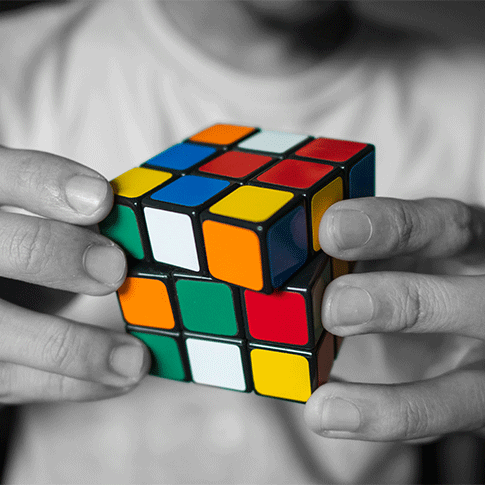

Stuart Southall of KANGS looks at the trade mark decision relating to the Rubik's Cube and provides some thoughts on what the decision could mean for future intellectual property disputes.
Whilst there may have been a significant advancement of technology and toys across the last 25 years, certain nostalgic toys remain prevalent in today’s society. One of those toys is the Rubik Cube.
The legendary toy was developed by Ernő Rubik in Budapest in 1974. Originally, it was designed to assist him with teaching his students about three-dimensional geometry and movement. The Cube was patented in 1975 and at the time known as the “Magic Cube.”
Following an agreement, and in an attempt to promote the product, it was rebranded to “Rubik’s Cube.” Since 1980, the Rubik’s Cube is believed to have sold over 350 million units and has inspired initiatives such as the World Cube Association, the Rubik World Championships (fittingly first held in June 1982 in Budapest) and “Speedcubing.” Given the significance of the brand, the Rubik Cube has a portfolio of Intellectual Property protections, including trade marks.
As an iconic toy, it is important that Rubik Cube is properly protected. However, in trying to secure maximum levels of protection for the toy, it may have inadvertently weakened its position. Following a decision handed down by the General Court of the European Union, the Rubik Cube 3D marks cannot be protected as EU Trade Marks.
The battle over 3D shapes in the EU has been longstanding. There have been many challenges and appeals brought in order to secure adequate protection for 3D toys. The dispute relating to 3D shapes has been ongoing since 1999.
The latest battle, undertaken by Spin Master Toys UK Limited, has unfortunately meant that the General Court of the European Union, when handing down its judgment, has made some fundamental decisions in respect of 3D shapes, namely:
- Rubik Cube 3D Marks cannot be protected as EU Trade Marks,
- That the addition of colours to a cube’s face does not remove the functionality of the shape,
- That the essential features of the Rubik Cube (these being the shape, grid and differentiation of the small squares, as defined by the six colours) were found to be necessary as a technical result,
- That the concept of shape, cannot be interpreted too narrowly and that specific colours remain an integral part of the shape.
This decision could have a wide-ranging impact on trade mark decisions in the EU. It has been previously accepted, within the EU, that shapes were capable of securing trade mark protection. However, this case has caused the General Court to revisit the “absolute grounds” provision set out in Article 7(1)(e)(ii).
The Rationale Behind the Court Decision
It may be argued that the rationale for this approach is to ensure that trade mark law does not provide an unjust or unwarranted monopoly on technical solutions or functional characteristics of a product, and to ensure that trade mark law does not supplement time limited Intellectual Property Rights (IPR) protections.
How We Can Assist in Intellectual Property Disputes
Trade marks are one of the key registrable mechanisms for protecting and enabling commercial exploitation of a brand. The trade mark team at KANGS offer a broad range of services from assisting those facing allegations of infringement to helping enforce rights against unauthorised use.
Additionally, our trade mark lawyers advise on Mark exploitation including licensing agreements, co-existence agreements and sales agreements. Furthermore, we have proven history of brining and defending cases in the Patents Court and the IPEC.
KANGS is equally experienced in acting for both claimants and defendants, so whatever your requirement our team will be able to provide the support you need. If we can be of assistance, please do not hesitate to contact our team using the details below:
Tel: 0333 370 4333
Email: info@kangssolicitors.co.uk
We provide initial no obligation discussion at our three offices in London, Birmingham, and Manchester. Alternatively, discussions can be held through video conferencing or telephone.





Top ranked by leading legal directories Chambers UK and the Legal 500.