


Animal Cruelty | Deprivation of Ownership
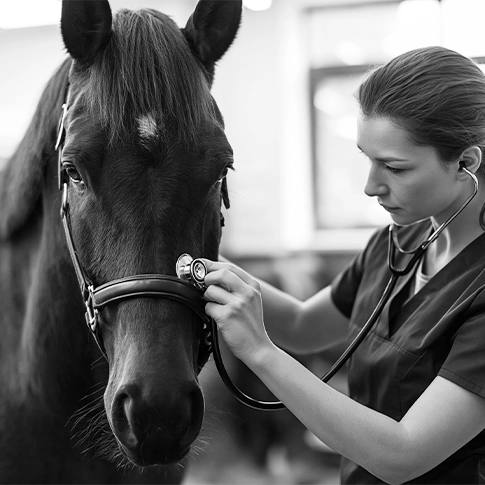

Where following an RSPCA investigation the owner of an animal is prosecuted and convicted under the Animal Welfare Act 2006 (‘the Act’) for an animal cruelty offence, such as causing ‘unnecessary suffering to an animal’, the Court may, as one of its options, make an Order depriving that person of ownership of the animal and directing its disposal.
In context of racing yard owners and race horse owners, the provisions most commonly engaged are the sections of the Act concerning unnecessary suffering, the administration of poisons, and the duties to ensure an animal’s welfare.
Prior to the Animal Welfare Act there was little in the way of welfare law designed to protect animals. Generally speaking, action was only taken against those responsible for suffering caused to an animal following its infliction.
The Act introduced responsibilities for those responsible for animals, including pet owners, breeders and those in charge of working or farm animals in England and Wales.
Enforcement agencies are now pro-actively advising and educating animal owners in order to prevent suffering. However, where such advice is ignored or instances of neglect or mistreatment are identified, action can be taken through formal warning or prosecution.
Sukhdip Randhawa of KANGS outlines the relevant law.
The Relevant Law | The Animal Welfare Act 2006
The Act provides as follows.
S.9 Duty of person responsible for animal to ensure welfare
A person commits an offence if he does not take such steps as are reasonable in all the circumstances to ensure that the needs of an animal for which he is responsible are met to the extent required by good practice.
This includes the need:
- for a suitable environment,
- for a suitable diet,
- to be able to exhibit normal behaviour patterns,
- to be housed with, or apart from, other animals, and
- to be protected from pain, suffering, injury and disease.
S. 33 Deprivation
If the person convicted of an offence under any of sections 4, 5, 6, 7, 8 and 9 is the owner of an animal in relation to which the offences was committed, the Court may, instead of or in addition to applying the usual remedies, make an Order depriving him of ownership of the animal and for its disposal.
The offences covered by the sections referred to are:
S.4: causing unnecessary suffering
S.5: conducting a prohibited procedure
S.6: docking of dogs’ tails
S.7: administering poisons
S.8: causing an animal to fight
S.9: failing to ensure that the needs of animal are met to the extent required by good practice.
Where a Court makes such an Order it may:
- appoint a person to carry out, or arrange for the carrying out of, the Order,
- require any person who has possession of an animal to which the Order applies to deliver it up to enable the Order to be carried out,
- give directions with respect to the carrying out of the Order,
- confer additional powers (including power to enter premises where an animal to which the Order applies is being kept) for the purpose of, or in connection with, the carrying out of the Order,
- require the offender to reimburse the expenses of carrying out the Order,
- specify the manner in which an animal is to be disposed of, or
- delegate the decision about the manner in which an animal is to be disposed of to an appropriately qualified person.
Where a Court makes such an Order it may:
- appoint a person to carry out, or arrange for the carrying out of, the Order,
- require any person who has possession of an animal to which the Order applies to deliver it up to enable the Order to be carried out,
- give directions with respect to the carrying out of the Order,
- confer additional powers (including power to enter premises where an animal to which the Order applies is being kept) for the purpose of, or in connection with, the carrying out of the Order,
- require the offender to reimburse the expenses of carrying out the Order,
- specify the manner in which an animal is to be disposed of, or
- delegate the decision about the manner in which an animal is to be disposed of to an appropriately qualified person.
Case in Spotlight | GS
GS worked in the racing industry for several decades, initially as a ‘head lad’ at a world-renowned stable, before establishing his own operation training racehorses and breeding brood mares.
Following an RSPCA investigation, GS was charged with nine counts of unnecessary suffering to horses under his care.
During the trial, the prosecution identified significant welfare failings, including:
- lice and worm infestations,
- inadequate dental care and overgrown hooves,
- insufficient feeding and poor body condition,
- a failure to obtain veterinary treatment for injured or unwell horses, and
- unsafe and dilapidated conditions.
There was a distinction drawn between the care provided to different groups of horses. While racehorses that generated income were maintained to an appropriate standard, brood mares and other horses connected with the breeding operation were found to have received inadequate care.
GS was convicted on all nine counts. The courts made a deprivation order requiring him to surrender the neglected horses. As a result, he lost not only the brood mares but also the breeding lines he had spent years developing.
Although the court declined to disqualify GS from keeping horses, noting submissions that the RSPCA had inspected the stables on two occasions after charge were brought and had raised no welfare concerns.
The Judge commented that the British Horseracing Authority was likely to determine, in light of the convictions, that GS was ‘not a fit and proper person’ to hold a training licence, particularly given that the licence had been suspended at the point of charge.
This case demonstrates the significant consequences that can follow welfare failings in a racing yard. A Deprivation Order may be used to remove valuable animals from an owner, trainer and breeder where welfare standards are not maintained consistently, irrespective of their commercial value.
Deprivation Orders | Racing Yard Owners, Trainers and Breeders
Racing yard owners, trainers and breeders face significant commercial and operational risks where a deprivation order is made. This is because such orders may:
- require the immediate removal of horses from the yard,
- disrupt training operations and breeding programmes,
- result in the loss of valuable bloodstock,
- damage relationships with owners, trainers and syndicates, and
- give rise to regulatory scrutiny and potential licensing implications.
How Can We Assist?
The team at KANGS has, for many years represented both individuals and businesses facing investigation and prosecution arising from alleged criminal activity of every nature including offences involving animal welfare.
We understand that such matters place not only personal reputation at risk, but also the continuity of your business, particularly where deprivation orders are under consideration.
Our specialist team can assist by:
- advising and representing you from the earliest stage of investigation, including RSPCA or local authority enquiries and interviews under caution,
- making detailed pre-charge representations with a view to preventing prosecution where appropriate,
- providing expert representation before the courts, including the cross-examination of veterinary and welfare experts,
- opposing deprivation orders and other orders, with carefully structured evidence addressing welfare standards, compliance, and proportionality,
- advising in relation to investigations conducted by the British Horseracing Authority including licensing and regulatory implications affecting your ability to operate within the racing industry.
We deliver strategic, proactive and commercially focused advice, ensuring that your position is protected at every stage.
If you are invited to attend a voluntary interview or an interview under caution in connection with an alleged animal welfare offence, seeking legal advice at the earliest opportunity is essential. Our defence solicitors have extensive experience advising and representing clients at every stage of animal welfare investigations, from routine matters to complex and high-profile prosecutions.
Contact our team using the details below:
Tel: 0333 370 4333
Email: info@kangssolicitors.co.uk
We provide initial no obligation discussion at our three offices in London, Birmingham, and Manchester. Alternatively, discussions can be held through video conferencing or telephone.





Top ranked by leading legal directories Chambers UK and the Legal 500.