


Careless and Dangerous Driving | Offences, Penalties and What You Need to Know
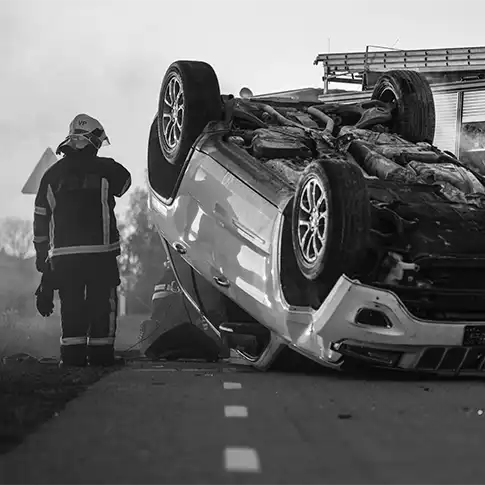

Where a road traffic collision has caused serious injury, the police will usually conduct a detailed investigation. Those suspected of committing driving offences will commonly be informed that they are being investigated for either careless or dangerous driving.
Careless driving generally involves inattention, misjudgement or a lapse in concentration that falls below the standard expected of a competent and careful driver. Dangerous driving is more serious and often involves deliberate conduct that creates an obvious and foreseeable risk of injury or serious damage, such as racing or driving too fast, dangerous overtaking or knowingly driving an unsafe vehicle.
Drivers may face prosecution for careless or dangerous driving in a variety of circumstances, not only following involvement in a road traffic collision, but also as a result of police observations, dashcam footage, reports made to the police or CCTV evidence capturing the manner of their driving.
At KANGS, we frequently represent clients charged with driving offences and regularly encounter individuals who have not fully appreciated the nature of the allegation they face or the legal responsibilities that apply to them.
This can include those charged with offences whilst riding a bicycle, whether manually or electrically propelled, who may be unaware of the responsibilities and legal obligations that apply when travelling on public highways.
Sukhdip Randhawa of KANGS summarises parts of The Road Traffic Act 1988 (‘the Act’) which creates the offences of Careless Driving and Dangerous Driving.
What is Careless driving?
Careless driving is generally concerned with inattention, misjudgement or a lapse in concentration that does not cross the threshold into dangerous driving and includes actions such as:
- accidentally driving through red lights,
- driving inappropriately close to another vehicle,
- emerging from a side road into the path of another vehicle.
Section 3 of the Act provides that:
If a person drives a mechanically propelled vehicle on a road or other public place without due care and attention, or without reasonable consideration for other persons using the road or public place, he is guilty of an offence.
Generally, a person is guilty of the offence if the manner of driving falls below that expected of a competent and careful driver.
However, careless driving becomes far more serious when it results from the driver being under the influence of drink or drugs.
Section 3A of the Act states that:
If a person causes the death of another person by driving a mechanically propelled vehicle on a road or other public place without due care and attention, or without reasonable consideration for other persons using the road or place and:
- he is, at the time when he is driving, unfit to drive through drink or drugs, or
- he has consumed so much alcohol that the proportion of it in his breath, blood or urine at that time exceeds the prescribed limit or
- he has in his body a specified controlled drug and the proportion of it in his blood or urine at that time exceeds the specified limit
he is guilty of an offence.
What is Dangerous driving?
Dangerous driving often arises from pre-meditated deliberate conduct which creates an obvious and foreseeable risk of injury to one or more persons or serious damage to property and includes:
- racing other vehicles
- driving at speeds in excess of the speed limit
- deliberately disregarding traffic lights and road signs
- driving vehicles with known defects.
Section 2 of the Act states:
A person who drives a mechanically propelled vehicle dangerously on a road or other public place is guilty of an offence.
A person is to be regarded as driving dangerously if:
- the way he drives falls far below what would be expected of a competent careful driver and
- it would be obvious to a competent and careful driver that driving in that way would be dangerous.
The most serious forms of the offence are covered by Sections 1 & 1A of the Act which provide that:
A person who causes the death or serious injury of another person by driving a mechanically propelled vehicle dangerously on a road or other public place is guilty of an offence.
Penalties Upon Conviction
Penalties for Careless driving
This offence is only tried before a Magistrates’ Court which, upon conviction, can impose:
- a fine for such amount as considered appropriate,
- endorsement of licence with penalty points,
- a disqualification from driving for a defined period.
Penalties for Dangerous driving
This offence is an ‘either way’ offence meaning that it may be tried either in a Magistrates’ Court or a Crown Court, depending upon the seriousness of the offence.
Upon conviction:
- the maximum sentence is a fine, two years’ imprisonment or both,
- a mandatory driving disqualification of at least twelve months will be imposed plus
- a requirement to pass an extended driving test before the licence is restored.
Causing death or injury by dangerous driving
Causing death by dangerous driving is an offence that can only be tried before a Crown Court. When sentencing, the court will take into account factors of an aggravating and mitigating nature. In the most serious cases, the offence may result in a sentence of life imprisonment.
Misconceptions Regarding Careless and Dangerous Driving
No accident occurred, so it cannot be dangerous driving
Neither offence requires an accident, injury or damage to have occurred. Dangerous driving is concerned with whether the manner of driving created an obvious risk of injury or serious damage, whilst careless driving concerns driving that falls below the standard expected of a competent and careful driver.
I did not intend to drive dangerously
A common misconception is that dangerous driving requires an intention to drive dangerously. In reality, the court applies an objective test and considers how a competent and careful driver would view the driving in question, rather than the driver's personal intentions.
I was only speeding
Although speeding is a standalone offence, excessive speed may also form the basis of an allegation of careless or dangerous driving, depending on the circumstances. The greater the speed and the risk posed to other road users, the more likely it is that the conduct will be regarded as dangerous.
Government Road Safety Initiatives and Driver Obligations
The Government is pursuing a road safety strategy aimed at saving lives by introducing a range of measures, including stiffer penalties for offenders, more stringent drink-driving laws, eye tests for older motorists and automatic emergency braking in new cars.
However, regardless of the measures introduced by the Government, road safety will continue to rely predominantly upon the responsible and careful driving of every individual. It will remain the case that those who fail in their duty may face prosecution for either careless or dangerous driving.
How Can We Assist You?
Road travel, whether by way of private motor vehicle, cycling or public transport, forms an essential part of everyday life for most people, and there is a natural expectation that every journey will be safely concluded. Unfortunately, accidents do occur.
It is always advisable to seek immediate legal advice when facing an allegation of careless driving, dangerous driving or any other motoring offence. Guidance should be obtained from specialist motoring offence solicitors before engaging in any discussion with the police, however informal or harmless it may appear.
The distinction between these offences can often be blurred. Early legal advice may therefore make a significant difference to whether a matter is pursued as careless driving, dangerous driving, if pursued at all.
At KANGS, our team of motoring offence solicitors have extensive experience gained from defending clients charged with every manner of motoring offence over many years and would be delighted to assist you.
Contact our team using the details below:
Tel: 0333 370 4333
Email: info@kangssolicitors.co.uk
We provide initial no obligation discussion at our three offices in London, Birmingham, and Manchester. Alternatively, discussions can be held through video conferencing or telephone.





Top ranked by leading legal directories Chambers UK and the Legal 500.