

Tree Preservation Orders (TPO)
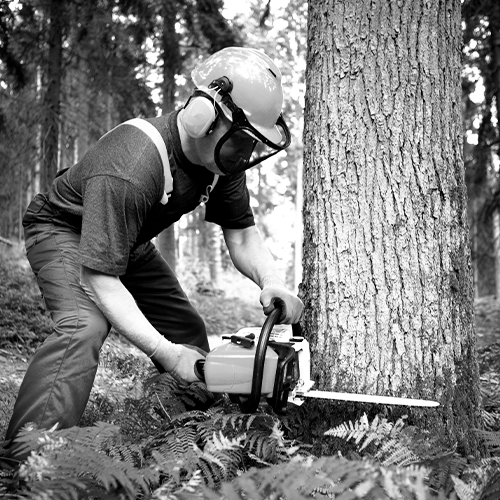

A Tree Preservation Order (‘a Preservation Order’) is made by a Local Planning Authority (‘the Planning Authority’) for the purpose of protecting specific trees or woodlands from:
- cutting down,
- uprooting,
- topping,
- lopping,
without the Planning Authority’s consent, in order to protect against wilful damage and destruction.
Part VIII of the Town & Country Planning Act 1990 (‘the Act’),and The Town & Country Planning (Trees) Regulations 1999 ( ‘the 1999 Regulations’) provide the relevant law.
Suki Randhawa outlines the law and the penalties which may be imposed for breach of a Tree Preservation Order.
Tree Preservation Orders
Making A Tree Preservation Order
The Planning Authority may make a Tree Preservation Order (TPO) if it appears ‘to be expedient in the interests of amenity to make provision for the preservation of trees or woodlands’.
Amenity is not defined in law and the Planning Authority is required to ensure that the making of a Preservation Order is within its powers. Important matters constituting amenity include:
- Visibility - when considering the impact on local environment, the trees normally require to be visible from a public place such as a road or footpath,
- discrete components, such as size and form, rarity, relationship to the landscape and character of a conservation area.
A Tree Preservation Order should protect selected trees and woodlands where their removal would result in a significant negative impact on the local environment and its enjoyment by the public.
A County Council may make a Preservation Order, subject to restrictions, where there also exists a District Planning Authority and a County Planning Authority, when it can only make one:
- in connection with the grant of planning permission,
- on land which is not wholly within an area of a single District Council,
- on land in which the County Council holds an interest,
- on land in a natural National Park.
Procedures when making an Preservation Order
Under Regulation 3 of the 1999 Regulations, the Planning Authority must, after making a Preservation Order, and before confirming it, serve on the persons interested in the land affected, a copy of the Order and a Regulatory 3 Notice:
- stating the reasons for making the Preservation Order,
- containing a statement that objections or other representations with respect to any tree, groups of trees or woodlands specified in the Order may be made to the Planning Authority,
- setting out the date, being at least twenty-eight days after the date of the Notice, by which any such objections or representations must be received by the Planning Authority, and
- where the Order contains a direction under section 201 (provisional tree preservation orders), a Statement of the effect of that direction.
Varying and Revoking a Tree Preservation Order
The Planning Authority has powers to vary or revoke a Tree Preservation Order and is required to keep all Preservation Orders under review.
Carrying Out Work on Protected Trees
There are various exemptions from the requirement to obtain Planning Authority consent for cutting down or carrying out work on protected trees. Such exemptions are provided in the Act.
Dead Dying and Dangerous Trees
Consent is not required for cutting down or carrying out work on trees which are dead, dying or have become dangerous. This enables dead wood and dangerous branches to be removed from an otherwise sound tree.
Where a tree outside woodland is removed, Section 206(1) of the Act states:
‘It shall be the duty of the owner of the land to plant another tree of an appropriate size and species at the same place as soon as he reasonably can.’
Statutory Obligations
Consent is not required for cutting down or carrying out work on trees in compliance with a statutory obligation. For example, work carried out to remove or restrict the height of trees in accordance with a direction made by the Secretary of State under the Civil Aviation Act 1982.
Nuisance
Consent is not required for cutting down or carrying out work on trees where necessary to prevent or abate a nuisance; the term being applied in its legal interpretation.
There is provision in common law for a landowner to cut down overhanging branches and encroaching roots from a neighbour’s tree.
Forestry Commission
Consent is not required for cutting down trees in line with a plan of operations agreed by the Forestry Commission under one of its Grant Schemes or for cutting down a tree(s) in accordance with a Felling Licence.
Penalties For Default of a TPO
Anybody who, in contravention of a Tree Preservation Order:
- cuts down, uproots or wilfully destroys a tree, or
- tops, lops or wilfully damages a tree in a way that is likely to destroy it
- is guilty of an offence.
Conviction in a Magistrates’ Court can result in a fine of up to £20,000. Serious offenders may be committed for trial in the Crown Court, where, if convicted, an unlimited fine may be imposed.
When determining the amount of any fine to be imposed, a court must have regard to any financial benefit which has, or may, accrue for the benefit of the offender. An offence may be committed for breach of a Tree Preservation Order even where a tree is not likely to be destroyed.
For example, the lopping of a tree in contravention of a Preservation Order may result in a conviction where, in this example, a Magistrates’ Court may impose a fine up to £2,500. There is a time bar for this offence of six-months.
How Can We Assist?
If you are, or anticipate being, prosecuted for any alleged regulatory offence, including a breach of a Preservation Order of any nature, it is essential that you seek immediate, experienced professional support and guidance.
The team at KANGS offers great experience gained from supporting clients facing such worrying circumstances over many years and will be delighted to assist you.
We welcome enquires by:
Telephone: 0333 370 4333
Email: info@kangssolicitors.co.uk
We provide initial no obligation discussion at our three offices in London, Birmingham and Manchester. Alternatively, discussions can be held virtually through video conferencing or telephone.





Top ranked by leading legal directories Chambers UK and the Legal 500.